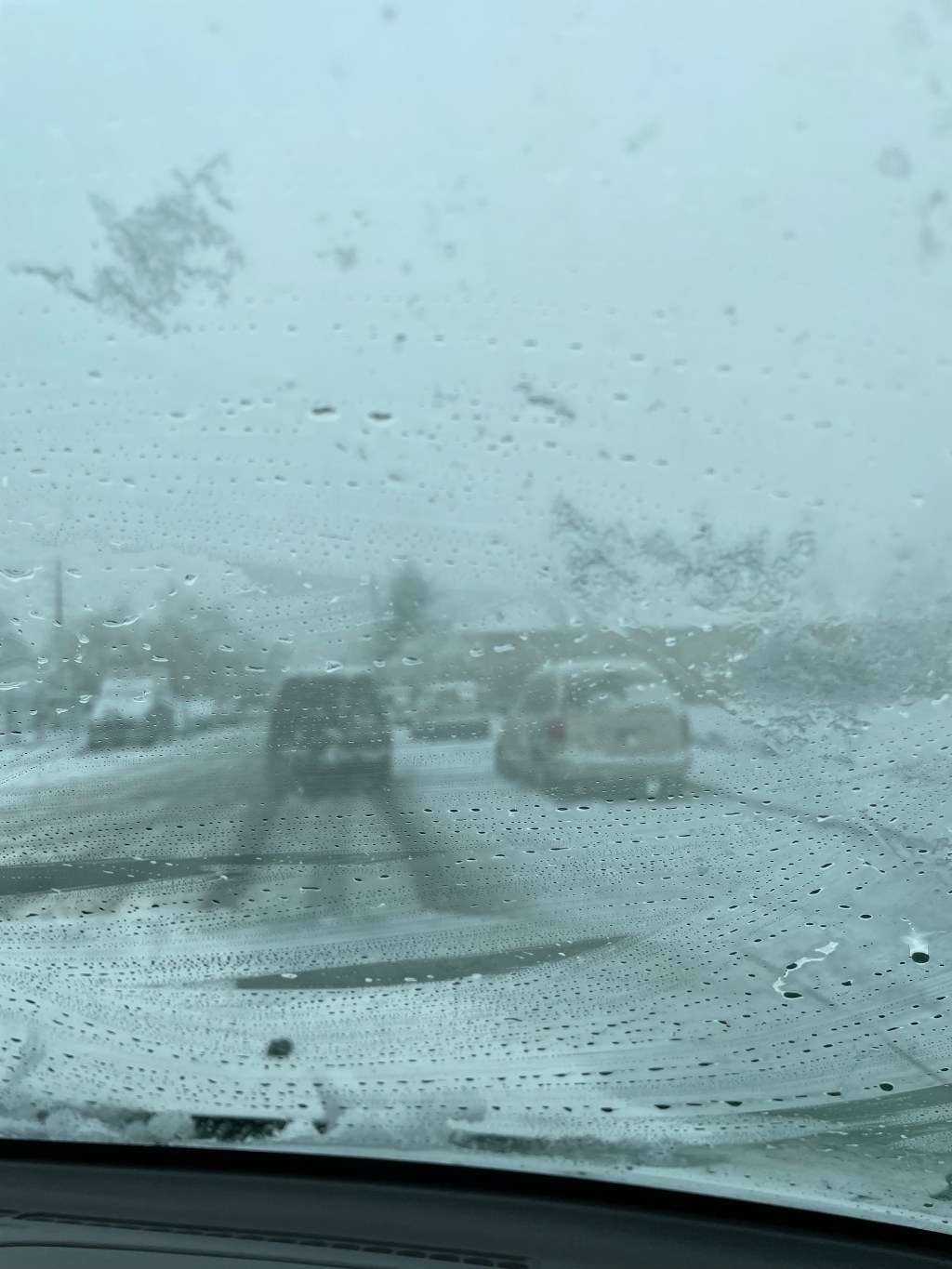
This winter storm is a blessing in disguise. The car creaks, the snow piles, the wind still or quick, has a touch of water on it. As I sit in the house, I watch the rain and say to my mother on the phone, “It’s snowing up high. I can tell.” In no less than 10 minutes, the low rain turns to snow, and the world to white.
The dirt of my backyard is covered. The broken table, extra trash cans, buckets, shovels, and empty pots are all tucked safely in.
In the morning, I wake up cold. My blankets seem thinner than before, but the same setup is on top of me: one goose down, two animal-patterned wool blankets, one an owl, and one a horse.
In the days before the storm, I am sitting in my room, contemplating my meaning in life and struggling to see clearly. This happens to me often, I wake up and an unexplainable dread comes over me, not just for the day, but the deciding of what to do with that day, and worse, coming up short. I often have this feeling because I work remotely and make my own schedule. I have done this for years, but the making of a weekly to-do list and morning routine doesn’t keep me from being rebellious. I still do whatever I want, whenever I want.
It’s funny that I chose a lifestyle in this format, because a few years ago and in many conversations that followed, I would explain to people why my life as a nomadic climber wasn’t all it was cut out to be. I was determined to have sympathy for what I was finding difficult, when other’s looked at me with blank eyes, nodding. “Yes, living in South Africa and walking to your favorite boulders must be hard…aimless…pointless…life must be drab.”
Their eyes had years of desk habitation and routine behind them. The lack of freedom created by the American 2 weeks of vacation time, a slave to someone else’s benefit.
My inability to sense that gratitude was the thing I was missing from my South African misery, was beyond my maturity.
The thing I was complaining about, as I reflect still on the personal weight of this discovery, was that we need structure to be free. The freedom to go and do what we want each day is not only a tiresome adventure, it is a luxury that has brought me to misery many times. One of my favorite psychologists who talks mostly about flow, says that happiness drops significantly when people are aimless, although we may equally complain about our rigid routines, the idea of having somewhere to go each day (that does not put one into dire misery, I might add) does give us a sense of purpose that can otherwise not be birthed.
The cold air of the house seeps into my fingers and toes, and I put on purple fleece pants, a baselayer with holes, and a wool sweater I bought in London on my last visit. The power is out. I walk to the kitchen, and reach for the lights, somehow forgetting that they don’t work, and I laugh. Sometimes, we don’t realize just how programmed we are. How much space in our actions is actually just a ritual and how much are we in control of? I notice that now I have a mission. How will I eat? How will I have coffee? How will I drive…
The mission excites me and I am brimming with ideas.
“I could walk to the cafe.”
“I can order breakfast in.”
“Should I just dig the car out?”
Before I realize that I am animated, excited, and moving and not in a state of self-imposed despair, I am on the case of solving the simple problems at hand. My car is not moving, it is far too entrenched in the snow and there is no use for my snow tires on the back axel of a front-wheel drive. The snow came before my ability to plan kicked in to have them swapped.
I call my partner and he comes over in his big American truck with tires as high and wide as would fit. He proudly picks me up and we drive to get breakfast. It seems the rest of the whole world also had this idea, and we are instructed to wait, given that more than 50,000 people no longer had power, many of us didn’t have the choice. My heart goes out to those who also had no choice but didn’t have the resources to go anywhere at all and I am thankful.
In the evening, the snow is so thick that the light catches with an expansiveness that breeds pleasure. “It’s past midnight,” I say, as we easily see our steps and the neighborhood houses, “It’s like daytime.” The brightness is confusing and wonderful. The snow brings the shine of day into the night. The house is darker than outside, and at home, with headlamps on our heads, we search endlessly for a lighter to light the single candle in the house. I wonder if it will even help, amongst all this effort. The car is searched. The closet is searched. The boxes in the closet are searched. The kitchen is searched.
“YES!”
It is found. Worth the incredible wait, we are laughing at the idea of spending all this time for something so small and being so elated at this tiny pleasure. The candle is so much brighter than you would think, lighting up orange and red into the room, giving a wonderful glow, and the bonus of not running into the side table every time you move about.
As we try to use the laptop, we realize the wifi is also gone, and all we have is our phones. We set up streaming on the phone and the laptop dies. We laugh at the inefficiency of everything without power. Through the light of the headlamp, we start making animals in the shadows on the ceiling and we have never laughed so hard.
We fall asleep, and the day, the adventure, and the mission to simply exist remind me of the pleasure of simple problems. My world is full of conveniences. I drive places. I have heat. I have a stove that is guaranteed with electricity. I have access to all the information in the world on my phone. I can call anyone. I am slathered with privilege, so why do I feel so bad?
Because it’s the tiny problems, the simple complications, the little missions that create the ultimate joy. The pleasure of snow shoveling your car out for 30 minutes and gazing at the tree branches in the glinting light above you. The pleasure of waiting for logs to light on the fire. The joy of searching in the dark for something you need. The delight of walking to your corner shop when you run out of milk. The sweetness of writing a friend a letter that is out of cell service. In a world of convenience, we miss the joy of the inconvenience, the joy of having more problems, of slowing down, and remembering that even so-called tedious things that we have created invention after invention to eliminate, are actually one of the greatest sources of joy. The purpose found through the obstacles of living and the beauty found in the time to enjoy them.

 alicehafer